The direct answer: start time, venue and current status
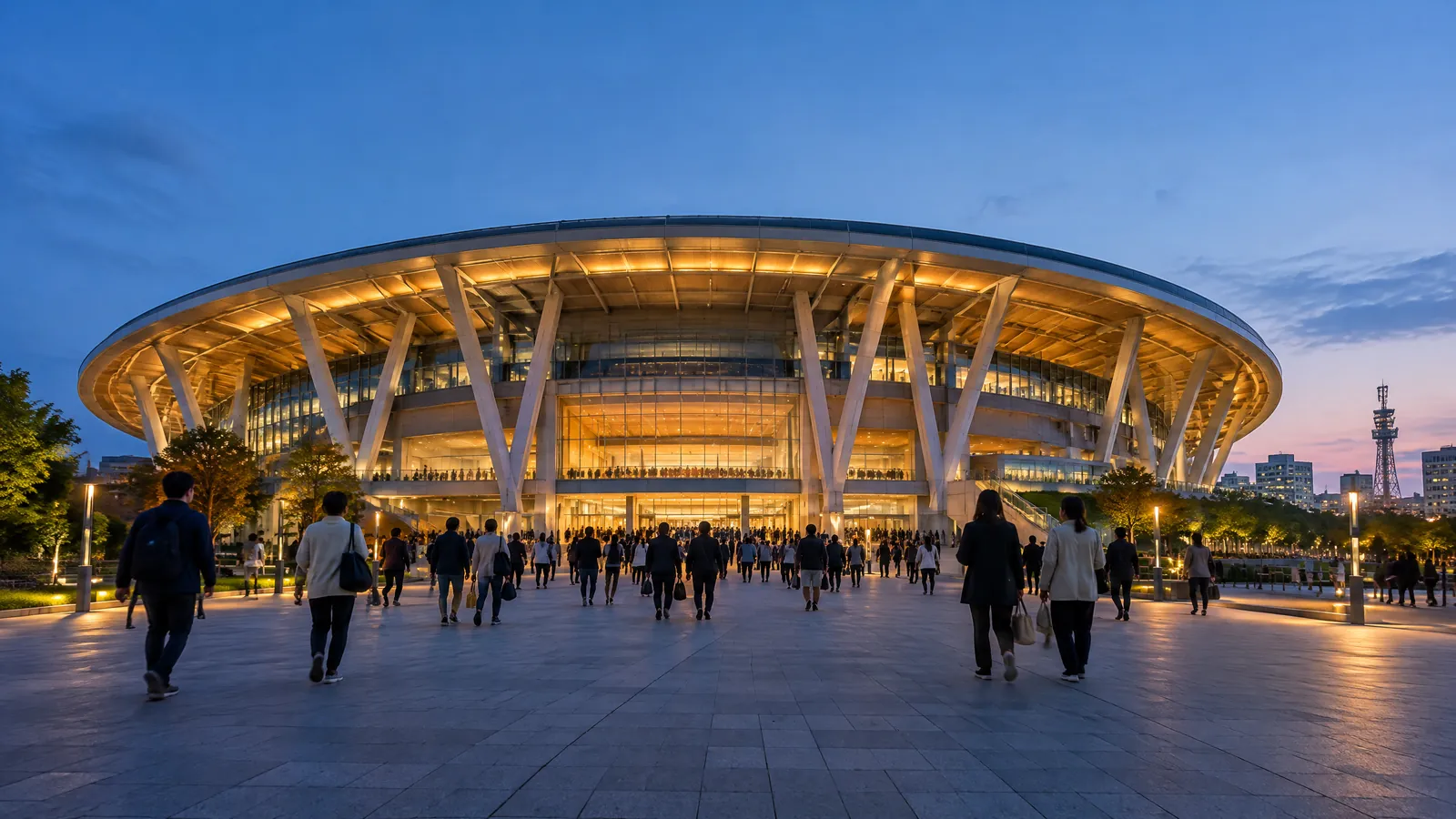
The Asian Games 2026 closing ceremony is scheduled for Sunday, 4 October at **18:00 Japan Standard Time (JST)** at Nagoya City Mizuho Park Athletic Stadium. JST is UTC+9, so that is **14:30 IST**, 09:00 BST and 04:00 EDT. The 20th Asian Games Aichi-Nagoya 2026 run from 19 September to 4 October; the organiser identifies the stadium as a ceremonies venue as well as an athletics venue.[1] [7]
For a ticket holder, the more important time is not 18:00. AINAGOC says identity verification begins at 13:00 JST, gates open at 13:30, the warm-up stage starts at 16:00 and admission must be completed by **16:30 JST**. In India those milestones are 09:30, 10:00, 12:30 and 13:00 respectively. Treat 16:30 as a hard completion target, not a suggested arrival time.[2] [4]
This is a service guide, not a prediction of performers, programme items or medal outcomes. The official pages checked for this article set out visitor rules and the results route, but do not confirm a closing-ceremony broadcaster or stream. That remains **pending** unless AINAGOC publishes a specific viewing announcement; do not assume that Games coverage in general establishes ceremony coverage.[2] [3] [4]
The ceremony-day timetable in Japan and India
The organiser's published sequence is straightforward: **13:00 JST** identity verification starts; **13:30 JST** gates open; **16:00 JST** warm-up stage begins; and **18:00 JST** is the scheduled ceremony start. For readers following in India, add the 3-hour-30-minute difference in reverse: 09:30 IST for verification, 10:00 IST for gates, 12:30 IST for the warm-up and 14:30 IST for the ceremony. Britain is on BST on 4 October, five hours behind Japan.[2] [4]
There is a separate access threshold at **16:30 JST (13:00 IST; 08:30 BST; 03:30 EDT)**. The visitor page says admission restrictions begin then and that entry may not be possible afterwards. The ceremony visitor document describes the closing-ceremony restriction period as 16:30–17:40 and tells spectators to be inside before the warm-up stage. Neither formulation makes late arrival safe.[2] [4]
Times are operational information and can change. The organiser's visitor guidance explicitly says schedules are subject to change, while its venue listings describe competition end times as tentative. Recheck the visitor page and the ticket-registration notice on 3 October and again before leaving for the venue on 4 October. A saved screenshot, search preview or older social post is not a substitute for the current organiser notice.[2] [7]
Registration is mandatory for every ceremony ticket
A ticket alone is not enough for the opening or closing ceremony. AINAGOC requires advance spectator-information registration and event-day identity verification, with **one registration for each ticket and attendee**. For the 4 October closing ceremony, the registration window runs until **Friday, 2 October, 23:59 JST** — 20:29 IST. The rule applies to ceremony spectators; the organiser says spectators at other Games events do not need this ceremony-registration process.[3]
Have the ticket's printed QR code or barcode and the identification document ready when registering. The registration notice says the form asks for the spectator's name, address, date of birth, nationality, gender, verification category and document number. A group purchaser must pass the process on to accompanying guests, who should register themselves against the particular ticket or seat they will use. Registration should reflect the actual attendee, not merely the purchaser's printed name.[3] [5]
On 4 October, bring the **original** ID registered online and the admission ticket. One government-issued photo ID, such as a passport, driving licence, residence card or student ID, is accepted; otherwise the notice sets out a two-document non-photo route. A photo, copy or later verification will not replace the original at the gate. An overseas visitor without a Japanese address or number is directed in the FAQ to enter their nationality, passport number and home-country contact details during registration.[3] [5]
Arrival, identity checks and the no-re-entry rule
Identity verification is conducted at **Nagoya City Mizuho Park Rugby Field**, before spectators are directed into Nagoya City Mizuho Park Athletic Stadium. The ceremony document asks visitors to show their admission ticket and ID to staff at that stage, then follow staff instructions into the stadium. A separate wheelchair-accessible verification-and-entry route is shown in the organiser map; attendees using wheelchair tickets should also consult the ticket FAQ about entering with a registered companion.[4] [5]
Build in time for the queue, bag screening and the walk from public transport. The organiser expects heavy congestion because both identity checks and security screening occur on the day. Its published instruction is to arrive well before the announced entry time, rather than joining the crowd near 16:30. The most defensible plan is to be in the verification queue well before the 16:00 warm-up, with your ticket and original ID already accessible.[2] [4]
Once inside, do not plan a break outside. Re-entry is not permitted for the closing ceremony at this stadium, and the ceremony FAQ says a group that wants to enter together should arrive together before entering. The visitor document also warns that controlled exit procedures may follow the performance because of traffic. These are access conditions, not optional etiquette, so plan food, medicine and onward travel around them within the official rules.[2] [4] [5]
Getting to Mizuho Park: use the ceremony route, not a generic venue plan
The organiser says taxis and private cars, including drop-off and pick-up, are not permitted for the ceremony-arrival process, and that spectators have no car or bicycle parking at the venue. Public transport is the recommended basis for Games spectators. That advice matters particularly here because traffic restrictions and road congestion are expected around the ceremonies. Do not infer that a parking arrangement for an ordinary competition session applies to the closing ceremony.[4] [6]
The ceremony visitor document lists three subway options to the rugby-field verification area: Mizuho Undojo Nishi on the Sakura-dori Line, about 10–15 minutes on foot; Mizuho Undojo Higashi on the Meijo Line, about 5–10 minutes; and Aratama-bashi, served by both lines, about 10–15 minutes. It also lists city-bus stops and walks, but those operational options should be rechecked on the day because road controls can alter travel conditions.[4]
Use the official ceremony instructions rather than the athletics venue page alone. Aichi Prefecture specifically tells opening- and closing-ceremony visitors to check the organiser's ceremony information because the route differs from competition access. The stadium page confirms the venue's dual role, while the ceremony document identifies the rugby field as the verification point. In practical terms, navigate first to the authorised verification route, then follow staff to the stadium.[6] [7] [4]
What to bring — and what may stop you at security
Travel light. The organiser asks spectators to limit luggage to one item in principle and says large bags such as wheelie bags are not allowed. It also says there are no baggage-storage facilities, coin lockers or luggage-check services at the venue. The detailed ceremony rules prohibit many familiar items, including glass, cans, alcohol, tripods, selfie sticks, drones, large luggage and umbrellas in the viewing area. Prohibited items discovered during screening can lead to refused entry.[2] [4]
A limited hydration exception exists: the ceremony rules allow one plastic bottle of 750 ml or less, or one water bottle of about 750 ml, per person, subject to the stated conditions. They advise a rain poncho or raincoat rather than an umbrella. Bring essential personal medication only in a reasonable amount and read the full prohibited-items list before travelling; it contains more detailed limits, including on camera lenses, flags, creams and ice packs.[2] [4]
Carry the ticket in a form that will work at entry and the original ID used in registration. The ceremony visitor document permits an electronic or paper admission ticket and recommends downloading an electronic PDF in advance; the registration FAQ stresses that entry is denied without the ticket. Because the two pages are operational instructions, follow the latest ticket-specific message if it is more precise. Do not rely on a copied ID image or a ticket detail left only in an account you cannot open.[4] [5]
Where to check official results and when a medal table becomes final
For Asian Games 2026 results, use the organiser-linked **Schedules & Results** service at results.asiangames2026.org. Its official interface provides sections for Disciplines, Schedule, Participants, Medals and Venues, with live events shown in the schedule. It is the correct hand-off for a current event result or medal standing, rather than a social-media screenshot or an unsourced live blog.[1] [8]
As at this guide's cutoff, the Games still run until 4 October. That means a medal table is a **live standing**, not the final overall result, while medal events remain. Check the Medals section for standings and the relevant discipline or completed event record for the underlying outcome. Only call the table final once the organiser's official service reflects completion of the Games; do not convert a mid-Games ranking into a final placing.[1] [8]
A useful secondary cross-check is Olympics.com's dated Asian Games medal-tally page, which labels its figures as 'so far' and shows the time of its 28 September update. That wording illustrates why timestamps matter, but it should not displace the organiser service for a current result. The Indian Olympic Association page is also explicitly a daily update and attributes the tally it displayed to Wikipedia, so it is not the definitive results record.[9]
A final checklist for 2–4 October
**By 2 October, 23:59 JST:** complete spectator registration for the exact closing-ceremony ticket; confirm that the attendee name, ticket/seat and ID document details match; save the reference number or confirmation-screen record; and make sure the actual attendee has the original ID. If a registered detail changes before the deadline, the FAQ says to re-register with the updated information. After the period, spectator changes are generally not permitted.[3] [5]
**Before travelling on 4 October:** open the current organiser visitor page, registration notice and ceremony-request PDF; verify the 13:00 verification start, 13:30 gate opening and 16:30 entry completion deadline; choose a public-transport route; and reduce luggage to essentials. Take the ticket, original registered ID and permitted hydration. Leave enough margin for the rugby-field verification point and security screening, not just the stadium start time.[2] [3] [4]
**For results and viewing information:** bookmark the official results service, select the Medals or relevant discipline section, and check timestamps before sharing a standing. Watch the organiser's news and visitor pages for any ceremony access, transport or broadcast announcement. Interest in Asian Games medal-tally searches is visible in Google's India RSS feed, but its 5,000+ label is an approximate, relative trend signal only — never a substitute for verified standings or a forecast of attention.[1] [8] [10]
Questions readers ask
What time is the Asian Games 2026 closing ceremony in India?
The closing ceremony is scheduled for 18:00 JST on Sunday, 4 October, which is 14:30 IST. Identity verification starts at 09:30 IST, gates open at 10:00 IST and spectators must complete entry by 13:00 IST.[2] [4]
What is the Asian Games closing ceremony entry cut-off?
Entry must be completed by 16:30 JST on 4 October. That is 13:00 IST, 08:30 BST and 03:30 EDT. AINAGOC says restrictions begin then and late entry may not be possible, so arrive much earlier for ID and security checks.[2] [4]
Do I need to register if I already have a closing-ceremony ticket?
Yes. Each closing-ceremony ticket requires advance spectator-information registration and event-day identity verification. The deadline is Friday, 2 October at 23:59 JST (20:29 IST); failure to register or verify identity can mean refusal of entry.[3] [5]
What ID do I need for the Asian Games closing ceremony?
Bring the original ID registered online plus the admission ticket. The organiser accepts one government-issued photo ID, such as a passport, driving licence, residence card or student ID, or two eligible non-photo documents. Copies and photos of the ID are not accepted for event-day verification.[3] [5]
Can I leave and re-enter Nagoya City Mizuho Park Athletic Stadium?
No. AINAGOC lists the closing ceremony at Nagoya City Mizuho Park Athletic Stadium among events where re-entry is not permitted. If you are arriving with a group and want to enter together, the ticket FAQ says everyone should arrive together before admission.[2] [4] [5]
How should I travel to the closing ceremony?
Use public transport and follow the ceremony-specific route to the rugby-field identity-verification area. The organiser says taxi or private-car drop-off/pick-up is not permitted for this process and there is no spectator car or bicycle parking. Nearby subway stations include Mizuho Undojo Nishi, Mizuho Undojo Higashi and Aratama-bashi.[4] [6]
Where are the official Asian Games 2026 results and medal table?
Use AINAGOC's Schedules & Results service at results.asiangames2026.org and open its Medals section for standings or the relevant discipline for event information. Until the Games conclude on 4 October and the organiser reflects completion, regard standings as live rather than final.[1] [8]
Sources
- 20th Asian Games Aichi-Nagoya 2026 — Official homepage — Aichi-Nagoya 2026 Organising Committee (AINAGOC). Accessed 2026-09-30T11:10:00+05:30.
- Information for Visitors — Aichi-Nagoya 2026 Organising Committee (AINAGOC). Accessed 2026-09-30T11:10:00+05:30.
- Notice for Opening & Closing Ceremony Spectators: Advance Registration & Identity Verification — Aichi-Nagoya 2026 Official Ticket Sales Site. Accessed 2026-09-30T11:10:00+05:30.
- Opening and Closing Ceremonies of the 20th Asian Games: Requests to all visitors — Aichi-Nagoya 2026 Organising Committee (AINAGOC). Accessed 2026-09-30T11:10:00+05:30.
- Regarding Spectator Information Registration Procedures — Aichi-Nagoya 2026 Official Ticket Sales Site. Accessed 2026-09-30T11:10:00+05:30.
- Access to competition venues for 20th Asian Games spectators — Aichi Prefectural Government. Accessed 2026-09-30T11:10:00+05:30.
- Nagoya City Mizuho Park Athletic Stadium — Aichi-Nagoya 2026 Organising Committee (AINAGOC). Accessed 2026-09-30T11:10:00+05:30.
- Aichi-Nagoya 2026 Schedules & Results — Aichi-Nagoya 2026 Organising Committee (AINAGOC). Accessed 2026-09-30T11:10:00+05:30.
- Asian Games 2026 medal tally: Complete table and full list of Indian winners — Olympics.com. Accessed 2026-09-30T11:10:00+05:30.
- Google Trends Daily Search Trends RSS — India — Google Trends. Accessed 2026-09-30T11:10:00+05:30.
Anna News Desk prepared this guide from current Aichi-Nagoya 2026 organiser and official ticket material, with Aichi Prefecture, Olympics.com and Google Trends used for clearly limited supporting context. Sources were rechecked on 30 September 2026. Ceremony access times, registration instructions, transport controls, security rules, ticket status, any broadcaster or stream, live results and medal standings can change. This guide does not sell tickets, guarantee admission or viewing access, predict results, or promise rankings, indexing, traffic, impressions or Discover placement.