At a glance
India A and Australia A are in the first of two four-day, unofficial Tests in Puducherry, the red-ball portion of a five-match tour. At the latest live update reviewed on 23 September, India A had been dismissed for 334 and Australia A were 20 for 1 after 13 overs of their first innings, still 314 runs behind. The position is necessarily time-sensitive: readers following the match should treat the live scorecard as the current record rather than this explanatory snapshot [3].
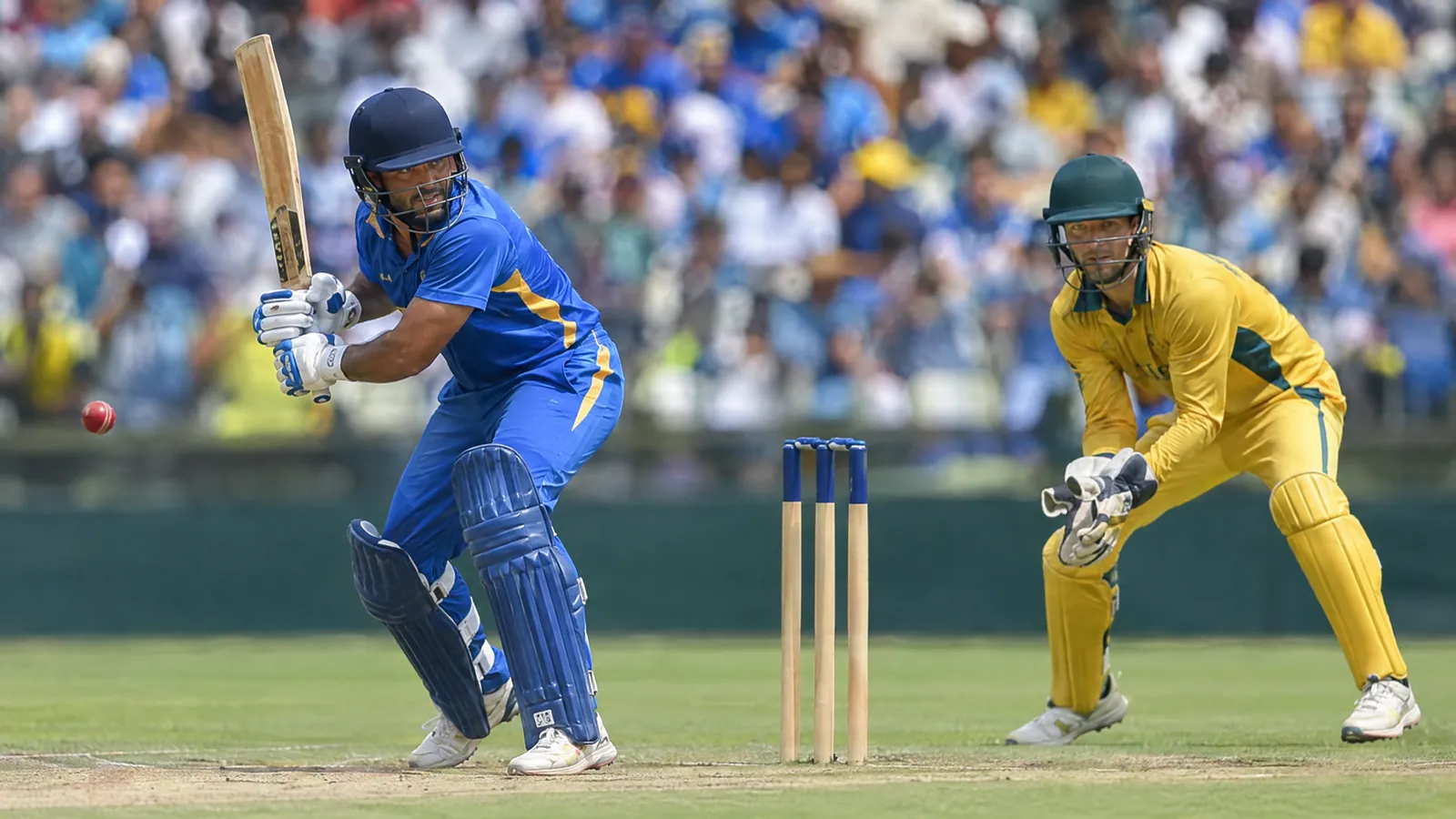
India A chose to bat after winning the toss. The home side were 97 for 5 on the opening day before Kumar Kushagra and Tanush Kotian added 138 for the sixth wicket; Kushagra made 82 before retiring hurt, while Kotian’s 68 not out helped reset the innings. Sai Sudharsan had earlier made 57. Australia A off-spinner Corey Rocchiccioli took three wickets on day one [4].
Where the match stands and how to follow the context
The match began on 22 September at the Cricket Association Pondicherry Siechem Ground and is scheduled through 25 September. Local play starts at 9.30am, with a four-day structure rather than the five days used for an official men’s Test. The live match page identifies the contest as the first unofficial Test and records India A’s toss decision, the local session times and the ground [3]. That distinction matters: performances count in players’ first-class records where applicable, but the fixture does not confer international caps or official Test statistics.
The early shape of the game has made India A’s lower-middle order central to the story. After the first-day recovery, Australia A’s immediate task is to reduce the first-innings deficit while managing a bowling attack that includes left-arm spinner Shams Mulani and seamer Praful Hinge. Sam Konstas and Nathan McSweeney were at the crease at the reviewed update after opener Campbell Kellaway fell for two [3]. A four-day match leaves time for the game to change, so a single session, a new-ball spell or the later influence of spin can alter the balance without determining the result by itself.
The broader demand signal is clear even without a verifiable Google Trends reading. BCCI’s 9 September selection release set out the home series and its fixtures, while Cricket Australia published its touring groups on 31 August. Established live-score and match-report coverage has also been updated during the opening contest. Those are signs of timely cricket-news interest, not a measure of the number of searches [1][2][3][4].
Format and schedule: two red-ball matches, then one-day cricket
This is a multi-format A-team tour, not a bilateral senior international series. The red-ball leg consists of two four-day matches in Puducherry: 22–25 September and 29 September–2 October. Three one-day matches then follow at the same city on 6, 9 and 11 October. BCCI’s fixture list describes the first two games as multi-day matches; Australia’s governing body describes them as four-day fixtures [1][2]. The equivalent labels are useful for audiences accustomed to different cricket terminology.
Four-day cricket rewards the same broad disciplines as a Test match—batting for long periods, using a new ball effectively, rotating spin and setting up a declaration or chase—but it offers less time to force a result. Teams must judge the state of the surface, weather interruptions and the rate of scoring with that compressed timetable in mind. The format is designed to give emerging and fringe players sustained red-ball opportunities, rather than to replicate the result structures or status of an official Test.
For Australia, the tour is also a chance to gain recent experience in Indian conditions before the five-Test Border-Gavaskar Trophy tour scheduled to start in January 2027. Cricket Australia said the A programme is part of its investment in developing game styles in subcontinent conditions. That is organisational context, not a guarantee that any individual will be selected for the senior series [2].
The multi-day squads and the players in focus
India A’s multi-day squad is: Aman Mokhade, Ayush Pandey, Devdutt Padikkal (captain), Sai Sudharsan (vice-captain), Yash Rathod, Shaik Rasheed, Kumar Kushagra (wicketkeeper), Shams Mulani, Tanush Kotian, Tushar Deshpande, Anshul Kamboj, Praful Hinge, N Jagadeesan (wicketkeeper), Nachiket Bhute and Vijaykumar Vyshak, subject to Vyshak’s fitness clearance. The official BCCI announcement separates this red-ball group from the later one-day squad, which Ruturaj Gaikwad will lead [1].
Australia A’s four-day squad is: Brendan Doggett, Jack Edwards, Peter Handscomb, Sam Harper, Liam Hatcher, Campbell Kellaway, Sam Konstas, Nathan McSweeney, Todd Murphy, Fergus O’Neill, Josh Philippe, Jhye Richardson, Corey Rocchiccioli, Jason Sangha and Liam Scott. Cricket Australia named Handscomb, Doggett and Richardson among the experienced red-ball options, with Konstas, McSweeney and Murphy among those selected for both formats [2].
For India A, Padikkal’s captaincy and Sudharsan’s return to a long innings are immediate points of interest, while Kushagra’s condition after retiring hurt on day one bears watching through official match updates. Kotian and Mulani give the hosts batting depth alongside spin options. For Australia A, the contest between their specialist spinners—Murphy and Rocchiccioli—and India A’s batters is already relevant after Rocchiccioli’s day-one return. Konstas and McSweeney, opening against a new ball in unfamiliar conditions, have a distinct test of technique and patience [3][4].
What to watch over the remaining days
First, watch the quality and length of Australia A’s first innings. A competitive reply would keep both teams’ second-innings decisions open; a larger deficit would put greater pressure on Australia’s batters and make India A’s bowlers the main drivers of the match. That is a reading of the score position, not a forecast. The side’s response to Mulani’s left-arm spin and to pace with the newer ball will offer a useful indication of how it adapts during a long visit rather than in a short limited-overs game.
Second, follow whether the first-day pattern of spin continues. Rocchiccioli’s three wickets came as he used turn, bounce, drift and variations on a mixed-soil pitch, according to the day-one report [4]. Conditions can evolve through a four-day match, and the ball and surface may not behave identically in every session. The more revealing evidence will be how batters adjust their scoring areas, footwork and defensive method over extended spells, rather than any isolated delivery.
Third, this is an opportunity to judge roles as much as headline scores. Wicketkeepers Kushagra, Jagadeesan, Harper and Philippe give selectors different batting and keeping profiles; allrounders such as Kotian, Mulani, Edwards and Scott affect team balance; and the pace groups must show durability as well as wicket-taking threat. These are development fixtures, so one result should be read alongside the players’ domestic records, fitness and the specific requirements of later squads.
Finally, viewers should keep the two formats separate. Several Australian players move into the one-day group after the red-ball games, and India’s one-day side has a different captain and selection balance [1][2]. A player’s workload, availability or role can therefore change between the second four-day match and the 50-over portion of the tour.
What happens next
The first four-day match is scheduled to conclude on 25 September. The teams then remain in Puducherry for the second red-ball match beginning 29 September, before the one-day series starts on 6 October [1][2]. Official team communications and the live scorecard remain the most reliable places to check late squad, fitness or match-position changes. This article was prepared by Anna News Desk after reviewing external reporting and official sources.
Questions readers ask
Is India A vs Australia A an official Test match?
No. It is an unofficial, four-day A-team match. It is a red-ball development fixture and does not award senior international Test caps or official Test statistics.
Where are the India A vs Australia A matches being played?
All five scheduled matches on the 2026 tour are in Puducherry. The first two are four-day matches, followed by three one-day games.
Who captains India A in the two formats?
Devdutt Padikkal is the captain of India A’s multi-day squad. Ruturaj Gaikwad is captain of the separately named one-day squad.
Sources
- India A squad for home series against Australia A announced — Board of Control for Cricket in India. Accessed 2026-09-23.
- Handscomb, Ashes-winning quicks in Australia A squad — Cricket Australia. Accessed 2026-09-23.
- India A vs Australia A, 1st unofficial Test at Puducherry — live score — ESPNcricinfo. Accessed 2026-09-23.
- Kushagra, Kotian fifties rescue India A from 97 for 5 — ESPNcricinfo. Accessed 2026-09-23.
- Australia A tour of India 2026 — fixtures — Cricbuzz. Accessed 2026-09-23.
Anna News Desk reviewed official BCCI and Cricket Australia releases, current ESPNcricinfo coverage and Cricbuzz fixture information on 23 September 2026. Google Trends was checked but did not provide usable data in this environment; no exact search volume is claimed. Live match details can change after publication.