At a glance: diplomacy is active, but durable ceasefires remain out of reach
Ceasefire diplomacy is prominent as leaders meet around the United Nations General Assembly, but the word covers different realities. In Gaza, the issue is whether an existing agreement and political plan can work despite continuing harm and restrictions. In Ukraine, officials are discussing a narrower halt to energy-related attacks while the wider war continues. In Sudan, a proposed 90-day pause is entangled with arguments over mediation terms and authority. These are not interchangeable negotiations; each involves different combatants, outside powers and humanitarian needs. [1][4][6]
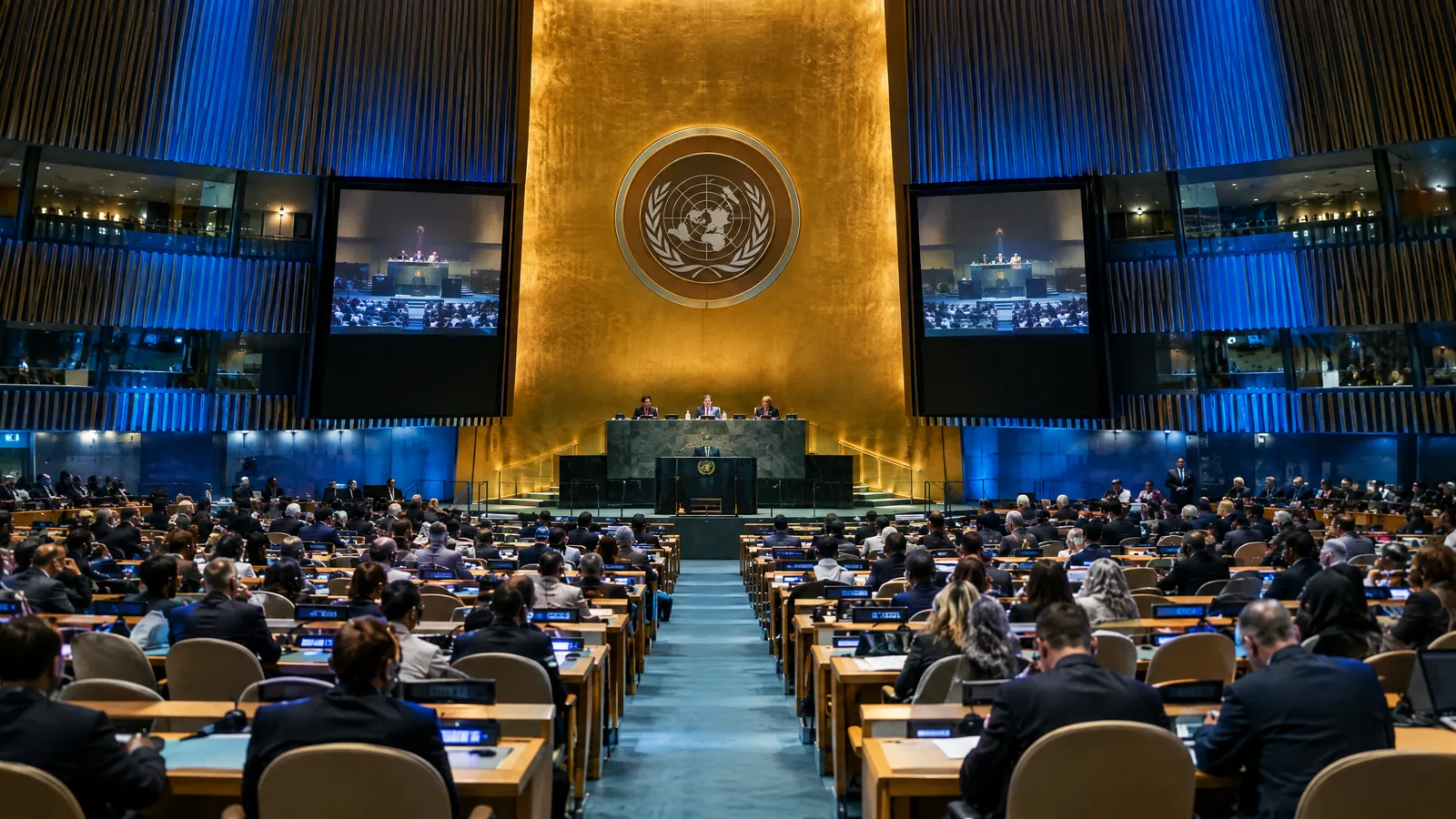
Public interest is understandable. Google Trends was checked for this article but did not provide a readable, comparable current series for Gaza ceasefire, Ukraine peace talks and Sudan ceasefire. The demand signal can therefore only be described directionally. The UN Secretary-General used his 22 September address to place the Middle East, Ukraine, Sudan and Myanmar together as examples of conflicts in which force is outrunning diplomacy. New reporting shows talks and proposals still moving, even when fighting has not stopped. [1][4][6]
What makes a ceasefire more than a temporary pause
A ceasefire can range from a short, local understanding to a nationwide halt backed by political commitments. It normally needs a shared definition of prohibited actions, a way to report and verify alleged breaches, channels for military deconfliction and consequences when terms are broken. It also needs agreement on the sequence: whether humanitarian access, the release or exchange of detainees, withdrawal or redeployment, security arrangements and political negotiations happen together or in stages. Without these details, an announcement can lower tensions for a time without resolving the dispute that produced the conflict.
The UN’s current framing is that protection of civilians and unobstructed humanitarian operations cannot wait for a final political settlement. That is practical as well as moral: aid routes, fuel, medical supplies and repair equipment require predictable access and local security. Yet humanitarian arrangements alone do not answer the harder questions of control, governance, territory, accountability and external military support. Mediation can create a channel between adversaries; it cannot remove those disagreements by itself. That is why public statements of openness to dialogue should be read as an opportunity for follow-up, not proof that an agreement is imminent. [1][2]
Gaza: implementation, aid access and the political horizon
In Gaza, diplomacy is centred on implementing rather than merely announcing a ceasefire framework. OCHA says the agreement was announced on 10 October 2025, but its 18 September update described continuing strikes, enormous humanitarian needs, restrictions on essential supplies and approaching winter. It reported that Kerem Shalom remained the only operational cargo crossing after the closure of Zikim in May, leaving supplies vulnerable to disruption. The UN is calling for the Gaza peace plan to be fully implemented with unrestricted aid. This makes access, repair capacity and civilian safety tests of whether the arrangement is functioning in daily life, not secondary issues. [2]
There is also a larger conflict-resolution question. The UN says the Security Council endorsed the October 2025 ceasefire agreement and a provisional 20-point plan, while the Secretary-General has urged a political path in which Gaza and the West Bank remain united under a legitimate Palestinian government. The same UN assessment warns that actions in the West Bank are narrowing the space for a viable two-State outcome. For mediators, then, the task is not simply to preserve a reduction in fighting. It is to connect security arrangements, reconstruction and Palestinian political agency to a credible longer-term process acceptable to the parties and sustained by international support. [3]
Ukraine: a proposed energy truce inside a wider war
Ukraine’s latest diplomatic track is more limited. After meeting US President Donald Trump in New York on 22 September, President Volodymyr Zelenskiy said Kyiv was ready for any format of bilateral ceasefire on energy-related targets. He also said he was ready for a trilateral meeting with Trump and Russian President Vladimir Putin, but had seen no indication that Moscow was ready to talk. Reuters reported that an earlier declared understanding on energy sites quickly gave way to further strikes. The distinction matters: an energy truce, if mutually agreed and observed, could reduce pressure on essential services, but it would not by itself halt combat elsewhere. [4][5]
The approach nevertheless has practical significance as winter approaches. Reuters reported that escalating aerial attacks have affected ports, warehouses, ships and energy infrastructure, while Black Sea grain exports have been disrupted. For India and other import-dependent or trade-connected economies, conflict effects can be felt through freight, fuel availability and food supply chains as well as through foreign policy. Those impacts are shaped by many factors, including weather, shipping routes, sanctions and government measures, so no single ceasefire proposal can determine them. A verifiable pause on infrastructure attacks could ease one source of disruption; its durability would depend on reciprocal compliance and a workable monitoring channel. [4]
Sudan: a contested proposal and the role of outside networks
Sudan illustrates how the design of mediation can itself become a point of dispute. Reuters reported on 22 September that the United States had made the UN travel of army chief Abdel Fattah al-Burhan contingent on accepting a proposed 90-day ceasefire, according to Sudanese and diplomatic sources. Khartoum has resisted the proposal, and the State Department said Washington was prepared to work with any serious partner for peace while raising the cost of continued conflict. The United States is pursuing the effort with the United Arab Emirates, Egypt and Saudi Arabia in the Quad format. None of this amounts to a confirmed ceasefire; it shows an attempt to create leverage around a proposal whose terms remain contested. [6]
The wider setting makes a pause difficult to sustain. The UN Fact-Finding Mission said in September that foreign recruitment and external support networks were strengthening both sides’ military capabilities, including through personnel, weapons, logistics and drones. It urged states to halt transfers where there is a substantial risk of contributing to serious violations and called for stronger enforcement of the Darfur arms embargo. A ceasefire negotiation has a better chance when parties believe continued fighting will not improve their position. Where external supply lines remain active, mediators must address incentives beyond the immediate battlefield as well as the terms accepted by the two principal forces. [7]
What happens next
The next test is whether diplomacy produces concrete, public benchmarks. In Gaza, those include safer and broader humanitarian access, entry of equipment needed for shelter and repairs, and visible movement on the political elements of the plan. In Ukraine, officials would need to define which facilities are covered by an energy arrangement, how incidents are assessed and how a narrower understanding relates to wider negotiations. In Sudan, the immediate questions are whether the 90-day proposal can be amended into terms the parties will consider, and whether regional and international actors can coordinate pressure without shutting off dialogue. [2][4][6]
Readers should treat fast-moving claims carefully. A meeting, a statement of readiness or a short reduction in attacks is not a signed, monitored and lasting agreement. Useful indicators are confirmation by the relevant parties, clear scope and duration, reliable compliance reporting, humanitarian access and continuing political talks. The UN can convene, document and support negotiations, but cannot substitute for consent by the parties. External reporting and official sources were reviewed for this explainer; developments after 23 September may change the status of individual proposals. [1]
Questions readers ask
Is an energy ceasefire in Ukraine the same as a full ceasefire?
No. An energy-target arrangement would be narrower, covering agreed infrastructure or categories of attacks. A full ceasefire would need a broader scope, clear geographic application, verification and arrangements for alleged breaches.
Why is humanitarian access part of ceasefire diplomacy in Gaza?
A ceasefire’s practical value is tested by whether civilians can safely receive food, medical supplies, fuel, shelter materials and essential repair equipment. Access arrangements can also help build confidence, but they do not replace a political settlement.
What could make a Sudan ceasefire more durable?
A durable arrangement would require terms accepted by the parties, credible monitoring, civilian protection and humanitarian access. The UN’s recent findings also underline the importance of addressing the outside networks that supply and support the warring sides.
Sources
- Secretary-General of the United Nations: General Assembly statement, 22 September 2026 — United Nations General Assembly. Accessed 2026-09-23.
- Humanitarian Situation Report | 18 September 2026 — UN Office for the Coordination of Humanitarian Affairs, occupied Palestinian territory. Accessed 2026-09-23.
- ‘Time is running out’ for Israel-Palestine two-State solution — UN News. Accessed 2026-09-23.
- Zelenskiy says he discussed energy truce, efforts to end Russia war with Trump — Reuters. Accessed 2026-09-23.
- U.S. envoys ‘very encouraged’ after peace talks in Moscow and Kyiv — NBC News. Accessed 2026-09-23.
- US ties Sudanese army leader’s UN visa to ceasefire plan, sources say — Reuters. Accessed 2026-09-23.
- Sudan: External support networks are fuelling conflict and civilian harm, UN Fact-Finding Mission warns — UN Human Rights Office. Accessed 2026-09-23.
Anna News Desk reviewed external reporting and official sources listed above. This is independent, neutral explanatory journalism. Google Trends data were not accessible in a comparable form, so search interest is described directionally and no exact search volume is claimed.