Meta Connect’s headline: a device for an AI agent
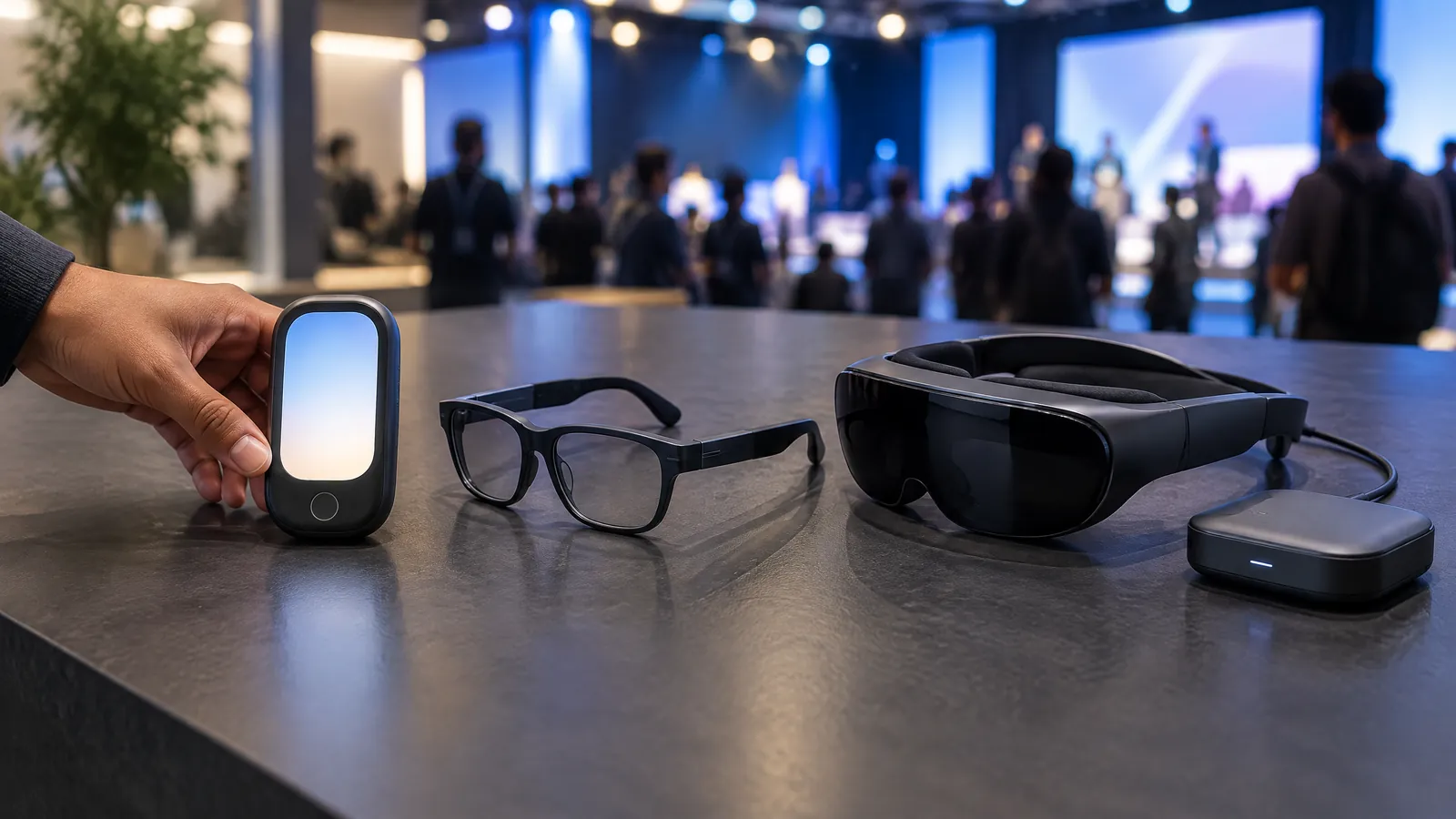
Meta’s most consequential announcement at Meta Connect 2026 was not a new chatbot alone. It was Muse Charm, a small standalone device intended to put the company’s Muse personal AI agent within immediate reach. The announcement, made during the 23 September keynote as Connect continued with developer sessions on 24 September, sits at the centre of the Meta Connect 2026 AI hardware announcements: Meta is spreading its agent across a dedicated handheld device, glasses and future VR hardware rather than tying it to a phone app.[1] [5]
Meta describes Charm as the first device made for Muse. Reuters reported that the gadget has an approximately two-inch touchscreen and built-in 5G, while The Verge reported a fingerprint sensor and said a small camera appears to be present. Those are early descriptions, not a full specification sheet. Meta’s current Charm page is a notification sign-up page, and the company has not published a price, battery figure, detailed country list or final technical specification.[5] [6] [7]
The launch timing also needs a precise reading. Meta told Reuters that Charm is planned to ship for the December holidays. The Verge reported that only a few devices have been built so far and that Meta said it still needed to finalise the finishing material. In other words, Charm has been announced and shown, but it is not a product that readers can buy today. That distinction is important in a category with a history of prominent demonstrations preceding difficult consumer rollouts.[5] [6]
What Muse is meant to do—and what Meta says controls it
Charm is designed around Muse, the personal AI agent Meta introduced on 8 September. Meta says Muse can work through a dedicated cloud-based Muse Secure VM, including by using a browser to handle tasks such as managing an inbox, booking travel or filling forms. It is rolling out in the United States on iOS, Android and the web, with some core use free and subscription plans for heavier use. Availability, features and connected services may differ by account and market.[2]
The key difference between an agent and a conventional answer engine is action. Meta says Muse can keep working after someone closes the app and can ask for approval before it sends an email or makes a purchase. Its published design says users choose connected apps and permission levels, can disconnect a service, and can view an audit trail. Meta also says the agent does not see passwords or payment details stored for it and that people can opt out of having their interactions used to train Meta AI models.[2]
These are Meta’s product and security claims, not an independent assurance that every connected task will be safe or correct. An agent can still misunderstand an instruction, encounter a misleading webpage or make an unsuitable recommendation. Readers considering an agent for consequential work should limit permissions, review its plan and confirm actions involving money, health, legal matters, credentials or external communications. The most relevant question is not whether the device looks like a phone replacement; it is what authority the user gives the agent.
The rest of the hardware launch: audio first, VR later
Meta also used Connect to broaden its AI-glasses range. Ray-Ban Meta Audio is a camera-free model that Meta says can play music and podcasts, handle calls and support hands-free conversations with an AI assistant. The company lists a starting US price of $349, says pre-orders are open and says the product ships on 13 October. It lists up to 12 hours of single-charge use and up to another 48 hours from the charging case; those are manufacturer-stated figures, not independently tested endurance.[4]
Removing the camera is a meaningful product choice, but it does not remove every consent question. Reuters notes that the glasses can still record audio and that critics say an audio-only device may not give bystanders a clear signal that recording is underway. Meta says its camera-equipped Ray-Ban Meta Gen 3 retains an LED recording indicator. Consumers should therefore separate the claim that the new Audio model cannot take photos or video from the broader question of whether an audio recording is appropriate in a particular setting.[4] [5]
At the higher end, Meta announced Meta VR Glasses for spring 2027 at $1,299.99 in the United States. Meta says the glasses weigh about 100 grams because processing, storage and battery are placed in a tethered puck. It describes micro-OLED displays, eye-, voice- and hand-based controls, and a mix of entertainment, productivity and gaming features. These are announced capabilities and partnerships ahead of launch, not a current retail product or a guarantee that every service will be available in every country.[3]
Why the hardware strategy matters
The event is a concrete move in the contest to make AI agents feel less like a website and more like an ambient personal service. Charm offers a screen and a physical activation point; audio glasses prioritise hands-free interaction; VR Glasses target a private visual workspace and entertainment. Meta is not presenting a single, settled design. It is testing different ways of making an agent available when a user does not want to unlock a phone.[1] [5]
That spread is also a practical acknowledgement of trade-offs. A handheld device can have a screen, cellular connection and a visible way to activate it, but it asks users to carry another object. Audio glasses may be easier to wear, yet have limited visual feedback and raise recording concerns. The VR product offers a larger visual environment, but depends on a tethered puck, a premium price and a later release. These are design constraints, not evidence that one model will win mainstream adoption.
For developers, the second day of Connect matters because Meta scheduled a developer state-of-the-union and technical sessions. For consumers, the nearer tests are simpler: whether the existing Muse rollout completes tasks reliably, whether its permission controls are understandable and whether the newly announced glasses meet their stated availability and battery claims in normal use. A product launch creates those questions; it does not answer them.[1] [2]
What is confirmed, and what remains open
Confirmed on 24 September: Meta has publicly announced Muse Charm; its official page identifies it as a device for Muse; the company has said it plans December holiday shipping; Ray-Ban Meta Audio is slated to ship on 13 October from $349; and Meta VR Glasses are listed for spring 2027 at $1,299.99. Meta Connect’s agenda also confirms that the event spans 23-24 September, with developer programming on the second day.[1] [3] [4] [5] [7]
Not confirmed in the published materials: Charm’s price, final detailed specifications, comprehensive battery information, a firm country-by-country release plan and an exhaustive account of how it connects in every use case. Meta’s source material also does not establish that Charm, any smart glasses or the VR device will replace smartphones. Reuters’ report notes that it remains unclear which AI-hardware form factor, if any, will reach mainstream status.[5]
That makes the most accurate framing for this technology story modest but significant. Meta has announced a high-profile device strategy around its newly launched personal AI agent and has put multiple products on different release schedules. The actual verdict will depend on delivered hardware, geographic availability, software reliability, user control and how people respond to devices that can hear, see or act for them. Until then, the announcements are a clear direction of travel—not a settled consumer outcome.
Questions readers ask
What is Muse Charm?
Muse Charm is Meta’s announced standalone device for its Muse personal AI agent. Meta’s product page calls it the first device made for Muse. Reuters reported an approximately two-inch touchscreen and built-in 5G; Meta has not published a full specification sheet or price.[5] [7]
When will Meta Muse Charm be available?
Meta told Reuters that it planned to ship Charm for the December 2026 holidays. The official product page currently offers a notification sign-up rather than a retail order, so final timing and market availability should be checked with Meta before purchase.[5] [7]
What did Meta announce at Connect besides Charm?
Meta announced Ray-Ban Meta Audio camera-free glasses, updates across its glasses line and Meta VR Glasses. Ray-Ban Meta Audio is due to ship on 13 October from $349; Meta VR Glasses are planned for spring 2027 at $1,299.99 in the United States.[3] [4]
Sources
- Meta Connect 2026 — Meta. Accessed 2026-09-24.
- Introducing Muse: The World’s First Personal AI Agent Built for Everyone — Meta Newsroom. Accessed 2026-09-24.
- Introducing Meta VR Glasses: A Cinema, Courtside Seat, and Workspace in Just 100 Grams — Meta Newsroom. Accessed 2026-09-24.
- Introducing Ray-Ban Meta Audio and More AI Glasses Styles — Meta Newsroom. Accessed 2026-09-24.
- Meta launches AI gadget Charm as race for post-smartphone hardware heats up — Reuters. Accessed 2026-09-24.
- Meta is making a standalone Muse AI gadget — The Verge. Accessed 2026-09-24.
- Muse Charm — Meta. Accessed 2026-09-24.
Reported by Anna News Desk from Meta’s Connect pages and product announcements, cross-checked against Reuters and The Verge. Product specifications, timings, availability and claimed performance are attributed to Meta or the named reporting and may change before release.