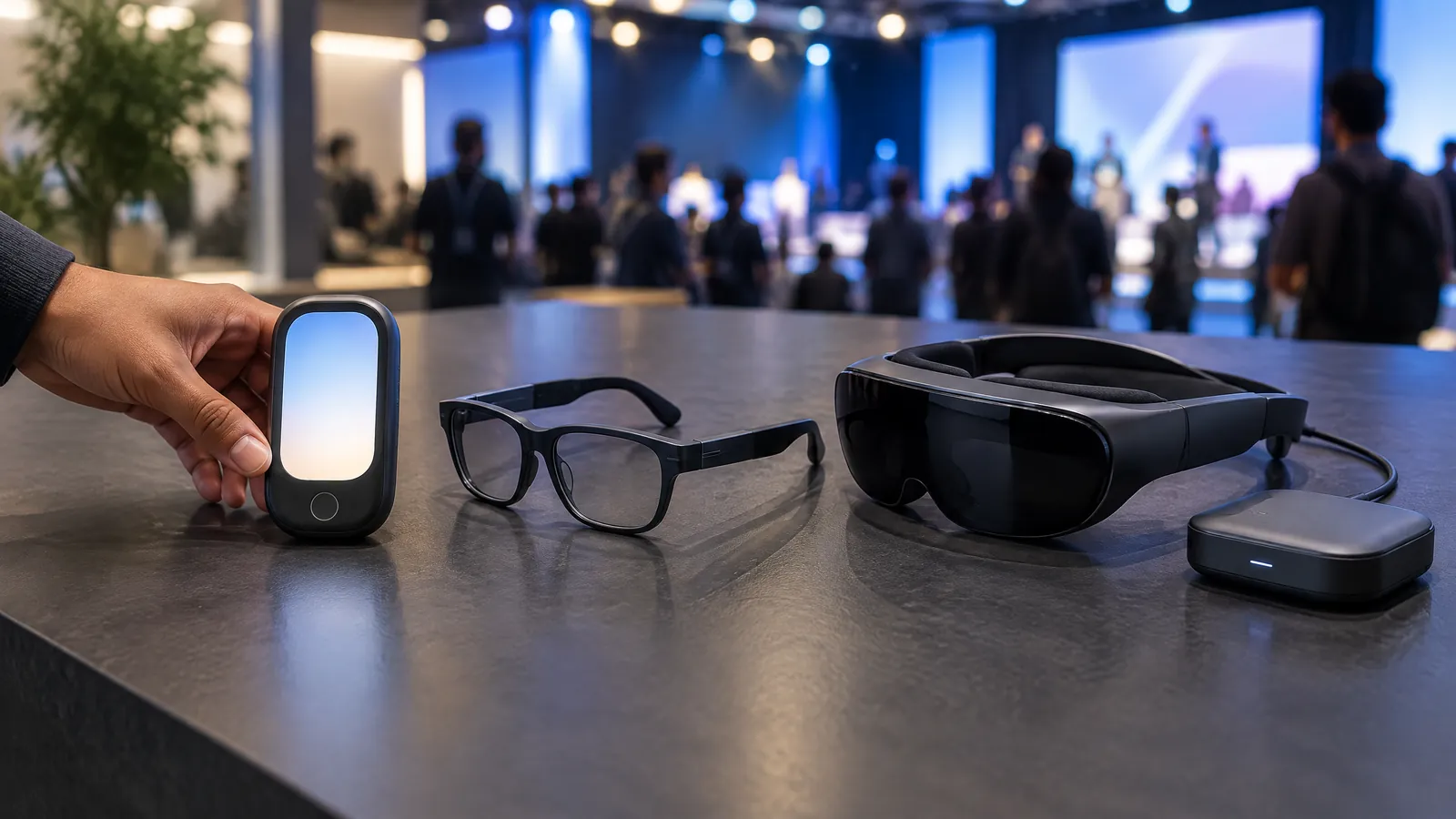
Qualcomm’s new platform moves earbuds beyond playback
For readers following technology news on 24 September 2026, the notable development is not a new pair of earbuds on a shop shelf. It is the chip inside a possible next generation of them. Qualcomm announced Snapdragon Sound Elite Gen 2 in Maui on 23 September, describing it as an audio-wearable platform that combines its Snapdragon Sound technologies with on-device AI, cloud-connected services and integrated micro-power Wi-Fi 6E.[1] The intended device list is unusually broad: conventional earbuds and headphones, open-ear designs, audio glasses, camera-enabled earbuds and future multimodal wearables.
That framing matters because a platform announcement is different from a consumer-product launch. Qualcomm supplies the underlying hardware and software for manufacturers to build with. The company says its reference designs should help original-equipment manufacturers prototype and commercialise products more quickly, but it did not announce a named retail earbud, a price or an India sale date in this release.[1] A prospective feature is therefore not yet a promise that it will appear in the next pair of buds sold locally.
The pitch is that an ear-worn device can become a more natural interface for an assistant than a screen. Qualcomm names real-time translation, contextual help, personalised hearing and interactions that combine sound, vision and AI among the potential uses.[1] Those are plausible categories, not a final feature checklist. A buyer’s eventual experience will depend on the brand’s microphones, sensors, software, supported languages, account requirements and the quality of its own service.
Technology news focus: camera earbuds remain a concept, not a product
The most eye-catching part of the announcement is the camera-enabled form factor. At the Snapdragon Summit, audio brand Cleer offered an early look at a device that combines audio, vision and AI on a Snapdragon Sound platform. Indian Express, reporting from Maui, described the concept as using a camera to map surroundings so an AI system can handle voice and visual context together. It reported that the aim is environmental context rather than taking photographs or recording video.[2]
This distinction is important, but it does not remove the need for scrutiny. A sensor that helps a device understand surroundings raises questions about when it is active, what is processed on-device, whether data leaves the device, what bystanders can tell is happening and how controls work. Qualcomm’s announcement says the platform includes security-focused cloud-connected intelligence, but does not set out the privacy design of a future Cleer or other branded camera product.[1] Those answers must come from the manufacturer before a finished device can be evaluated.
Independent coverage also cautions against reading the demonstration as imminent retail availability. SoundGuys reported that Qualcomm had not announced specific earbud or headphone models using the platform, although Bose, HP and Cleer were named as early launch partners developing personal-audio products.[5] The sensible reading is that this is a direction of travel for premium hearables, not a cue to expect camera earbuds in Indian stores this week.
What the on-device AI and Wi-Fi claims actually mean
Qualcomm’s headline performance comparisons deserve their qualifiers. It says Elite Gen 2 delivers up to twice the AI capability of the Snapdragon S7 Gen 1 Sound Platform, up to 40% lower power consumption and a footprint up to 30% smaller.[1] Its detailed notes say the AI comparison uses peak compute under specified conditions, while the power figure is a simulated Wi-Fi-connected idle target and remains subject to final silicon power measurements. These are company performance claims, not battery-life promises for a particular retail product.
The potential benefit of more local processing is responsiveness. Tasks such as voice detection, adaptive noise control and parts of transcription or translation can, in principle, be handled nearer to the wearer rather than sent to a phone for every step. audioXpress reports that the platform has a dedicated eNPU accelerator and is designed to run audio, communications, sensing and AI workloads together.[4] That does not mean every AI answer will run offline: more demanding services may still use the cloud.
The new connectivity proposal is just as consequential. Qualcomm says integrated micro-power Wi-Fi 6E supports direct access to assistants, services and content through its Snapdragon Sound Apps & Agents approach.[1] CNET notes that Wi-Fi is intended to complement Bluetooth inside small products and enable direct-to-cloud availability.[3] In practical terms, a compatible wearable may need less day-to-day phone mediation, but it will still need an appropriate Wi-Fi connection and whatever app, subscription or sign-in an individual service requires.
Audio quality remains part of the argument
This is not solely an AI story. Qualcomm says the platform retains aptX Lossless and XPAN, while adding fifth-generation adaptive active noise cancellation, enhanced voice processing and support for more advanced microphone arrangements.[1] The claimed goal is clearer calls, stronger assistant interactions and listening modes that adapt to surroundings. Qualcomm’s Snapdragon Sound overview says certified products are tested for interoperability before they can carry the Snapdragon Sound badge, although that certification is separate from a guarantee that every feature will be included in every model.[6]
The engineering constraint is battery capacity. Earbuds have limited room for chips, microphones, antennas and cells, which explains why Qualcomm places weight on a smaller footprint and lower power target. Smaller, more efficient silicon could allow manufacturers to balance extra sensors or connectivity with battery life, but design trade-offs remain theirs to make. A heavy translation session, frequent cloud calls or an always-active sensing mode could have a different effect from the controlled idle comparison used in the announcement.[1] [4]
Consumers should also avoid treating the platform’s terminology as a universal standard. AptX Lossless, Wi-Fi audio, direct-to-cloud features and AI enhancement require support across the relevant earphones, source device, router or service where applicable. Qualcomm’s own material presents XPAN as a way to hand off to Wi-Fi beyond normal Bluetooth range; it does not imply that every phone, network or future pair of earbuds will offer identical behaviour.[6]
What Indian buyers and developers should watch next
For Indian buyers, the immediate answer is to wait for product-level facts. Look for a named model, India pricing, a release window, warranty terms and clear statements on which functions work with a phone, on Wi-Fi or offline. Translation claims should identify supported Indian and international languages, whether conversations are stored, and whether access carries a recurring cost. A chip announcement cannot answer those questions on behalf of every brand that may adopt it.
Privacy documentation will be especially important if camera-assisted audio products progress from concept to retail. Prospective buyers should look for a physical indicator or clear controls, a straightforward explanation of local versus cloud processing, retention and deletion options, and policies for use in public or professional settings. These are practical checks, not allegations about the Cleer concept or Qualcomm’s platform. They reflect the difference between an unobtrusive contextual sensor and a product people can trust around others.
For developers and audio companies, the launch signals a competitive push to put AI capabilities into a familiar wearable rather than asking users to carry another screen. Qualcomm has made the silicon announcement at a moment when the final shapes of these devices are still unsettled. The verified technology news takeaway is therefore measured: Elite Gen 2 is a fresh, credible platform launch with a striking concept attached, but its relevance in India will be proved only when brands disclose finished products, safeguards, service terms and local availability.[1] [2] [5]
Questions readers ask
What did Qualcomm announce on 23 September 2026?
Qualcomm announced Snapdragon Sound Elite Gen 2, a platform for audio wearables including earbuds, headphones, audio glasses and camera-enabled designs. It combines audio technologies, on-device AI and micro-power Wi-Fi 6E.[1]
Are camera-enabled Qualcomm earbuds available to buy in India?
No retail camera-earbud model, India price or India availability was announced. Cleer demonstrated an early concept based on the platform; Qualcomm did not present it as a confirmed product launch.[1] [2] [5]
Will the new chip let earbuds work without a phone?
It is designed to give compatible wearables direct Wi-Fi access to cloud services, reducing reliance on a phone for some functions. Whether a finished product works without a phone in a specific use case will depend on its maker, network and service requirements.[1] [3]
What are Qualcomm’s AI and power claims for Elite Gen 2?
Qualcomm claims up to twice the AI capability, up to 40% lower power consumption and up to 30% smaller footprint versus its prior Sound platform under disclosed conditions. The power result is a simulated Wi-Fi-connected idle comparison, not an all-day battery claim.[1]
What should buyers check before considering AI earbuds?
Check the exact model’s supported features, battery test conditions, India price, data and privacy controls, language support, app or subscription needs, and warranty. Platform capabilities do not automatically appear in every product based on that platform.
Sources
- Snapdragon Sound Elite Gen 2 Advances Intelligent Audio Wearables for the Agentic Age — Qualcomm. Accessed 2026-09-24.
- Qualcomm puts cameras in earbuds, adds AI to headphones — The Indian Express. Accessed 2026-09-24.
- From Audio Glasses to Earbuds With Cameras, Headphones Are Getting a Major AI Rebrand — CNET. Accessed 2026-09-24.
- Qualcomm Snapdragon Sound Elite Gen 2 Integrates AI and Wi-Fi for Next-Generation Hearables — audioXpress. Accessed 2026-09-24.
- Qualcomm's new chip wants your earbuds to think for themselves — SoundGuys. Accessed 2026-09-24.
- Snapdragon Sound Technology Suite — Qualcomm. Accessed 2026-09-24.
Anna News Desk reported this article from Qualcomm's primary announcement and product information, alongside reporting by The Indian Express, CNET, audioXpress and SoundGuys accessed on 24 September 2026. Some technical performance figures are Qualcomm claims under its stated test conditions. No retail camera-earbud model, price or India launch date has been announced. This is an informational technology report, not a product endorsement or buying advice.