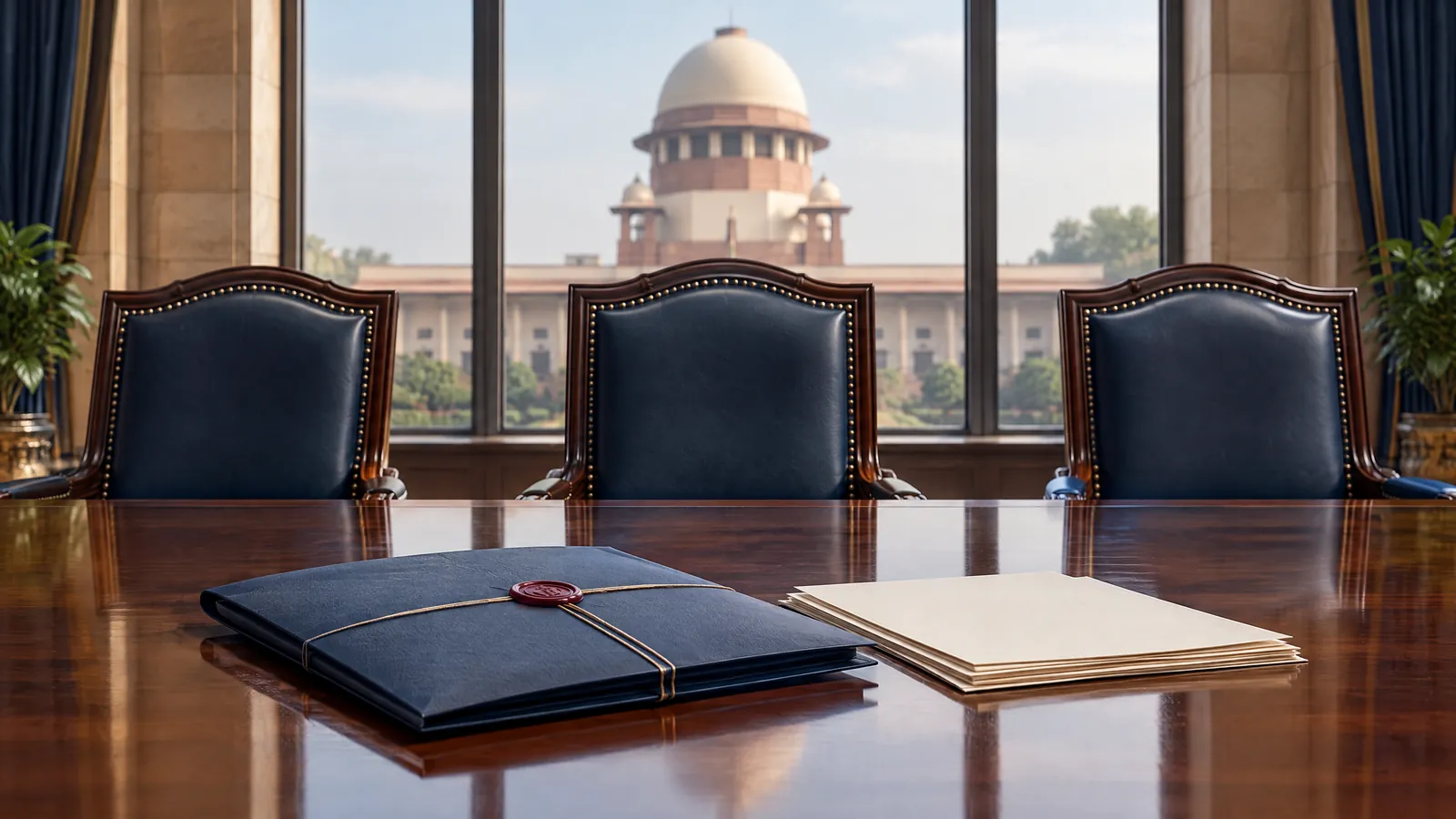
A consent request, not a contempt case — yet
The immediate development is narrower than the phrase ‘Election Commission contempt petition’ may suggest. Supreme Court advocate Brajesh Singh has reportedly written to Attorney General for India R. Venkataramani seeking written consent to initiate criminal-contempt proceedings against Chief Election Commissioner Gyanesh Kumar. LiveLaw reported the letter on 24 September, describing it as a request made under the Contempt of Courts Act and the Supreme Court’s contempt rules.[1]
At the time this article was checked, 12:36 PM IST on 24 September, there was no identified public record that the Attorney General had granted consent. Nor was a Supreme Court criminal-contempt case number, listing, hearing or order identified in the material reviewed. That distinction matters: an allegation in a request for consent is not a judicial finding, and it is not proof that proceedings will follow.
The Election Commission contempt petition request is linked to a much wider dispute over how the three-member Commission has handled certain electoral-roll decisions. It arrives after an Indian Express investigation reported that Election Commissioners Sukhbir Singh Sandhu and Vivek Joshi had formally objected at least 14 times over 10 months to steps they said were taken without their knowledge or approval.[2]
What is alleged, and what the Election Commission says
According to the report about the consent request, Singh alleges that decisions or communications were issued in the name of the full Commission while bypassing the other two Election Commissioners. The request refers to questions around changes to Form 6 for voter registration, additions or deletions in electoral rolls, and access to the electoral-roll database. These are allegations attributed to the advocate’s request and to the underlying reporting; they have not been tested by a court.[1] [2]
The Indian Express said it had seen the exchanges it described and sought responses from the Commission and the two Commissioners. The reported objections concerned voter registration and deletion, appeals in the Special Intensive Revision process, Form 6 and database oversight.[2] [6]
The ECI rejects the premise that the notes show an unlawful split. It says every decision, including the Special Intensive Revision, was unanimous and approved by all three Commissioners. It describes written notes and technical suggestions as normal deliberation, and says its actions followed the law.[3]
Why Attorney General consent is the first procedural hurdle
Criminal contempt is not a general label for an administrative disagreement. The Act covers conduct that scandalises a court, prejudices judicial proceedings or obstructs the administration of justice. A person other than the specified law officers ordinarily needs the Attorney General’s written consent to use the Supreme Court route invoked in the reported request.[1]
That makes this a request for consent, not a case outcome. Even if consent were given, a court would have to consider a properly filed matter. The reporting reviewed establishes neither an Attorney General decision nor a court view on the merits.
Section 16 of the 2023 Act says no court shall entertain civil or criminal proceedings against a serving or former Commissioner for an act, thing or word done in the course of, or purporting to be in the course of, official duty. Whether it would apply to a proposed contempt route is for the appropriate forum; this article does not assume an answer.[7]
The Supreme Court principles being invoked
The request reportedly relies on *T.N. Seshan v. Union of India*, the Supreme Court’s 1995 decision on a multi-member Election Commission. The judgment said Article 324 envisages a body comprising the CEC and other Commissioners. It said treating the CEC’s word as final would render the others non-functional or ornamental, while recognising majority decision-making where views differ.[4]
That principle does not establish the disputed facts. The 2023 Act also calls for unanimity as far as possible and makes the majority decisive when Commissioners differ. It permits a unanimous Commission to regulate procedure and allocate work. Whether that happened in a particular decision cannot be answered from the statutory text alone.[7]
*Anoop Baranwal v. Union of India* (2023) stressed the need for an independent Election Commission and created an interim appointment arrangement pending legislation. It is institutional background, not a ruling that the present allegations are true.[8]
The 23 September Supreme Court order is a separate matter
Public discussion has also connected this episode with a Supreme Court order delivered on 23 September in challenges to the 2023 appointments law. Justices Dipankar Datta and Satish Chandra Sharma differed on the reference question but jointly directed that the papers be placed before the Chief Justice for considering a Constitution Bench to decide the validity of Section 7 and other provisions of that Act.[5]
That order concerns the design of the appointment framework. It does not institute contempt proceedings against Kumar, decide the reported internal objections, or rule on the consent request. Keeping these threads separate is essential: a constitutional challenge, an administrative controversy and a proposed criminal-contempt route have different questions, evidence and procedures.
What to watch next
The first verifiable next step is whether the Attorney General grants or declines written consent. After that, the meaningful markers would be a filing, case number, listing or Supreme Court order. Until then, it is inaccurate to say the CEC has been held in contempt or that a contempt case has been decided.
The documents to watch are the advocate’s full letter, an Attorney General communication, an ECI release or a court record. Because electoral-roll management affects voting rights, serious claims about a constitutional authority require both the Commission’s response and clarity about what is not yet known.[2] [3]
Readers should also distinguish institutional disagreement from contempt of court. Commissioners can debate procedure, timing and technical implementation without that disagreement automatically becoming contempt. The reported request advances a legal theory about compliance with earlier judgments; the Attorney General and, if a case is eventually filed, the Supreme Court would have to consider the relevant documents, statutory protections and factual record. Headlines cannot substitute for that process.
Any later article should therefore carry a fresh timestamp and identify precisely what changed. Consent from the Attorney General would be one development; registration of a petition would be another; a notice issued by the court, an interim order and a final ruling would each have different legal significance. The absence of one of those steps should not be filled with inference, particularly where an election authority and named constitutional office-holder are involved.
Questions readers ask
Has the Supreme Court started contempt proceedings against Gyanesh Kumar?
Not on the material checked by Anna News at 12:36 PM IST on 24 September 2026. Reporting says an advocate sought the Attorney General’s consent to begin a criminal-contempt route. No public record of consent, a Supreme Court case number, listing, hearing or order was identified in the sources reviewed.[1]
What are the allegations in the Election Commission contempt petition request?
The reported request alleges that other Election Commissioners were bypassed on certain actions presented as decisions of the full Commission. It draws on reports about objections concerning electoral-roll additions and deletions, Form 6 and voter-data systems. These are allegations, not findings of fact by a court.[1] [2]
What has the Election Commission said?
The ECI says all its decisions, including the Special Intensive Revision, were unanimous and approved by all three Commissioners. It says internal notes, suggestions and differing views are normal parts of deliberation before final decisions, and that actions followed the law and Commission instructions.[3]
Does T.N. Seshan mean the CEC cannot make decisions?
No. The 1995 judgment does not make the CEC powerless. It says the Election Commission is a multi-member body and that the other Commissioners must have a meaningful role; where there is a difference, the majority view can decide the matter. Applying that principle to a specific disputed act depends on the facts and the legal procedure followed.[4] [7]
Sources
- Petition Seeks Contempt Action Against CEC Gyanesh Kumar For Alleged Violation Of Supreme Court Judgments — LiveLaw. Accessed 2026-09-24.
- 14 times in 10 months, two Election Commissioners objected on record to poll panel steps — The Indian Express. Accessed 2026-09-24.
- Dissent row: Election Commission says highlighting certain internal notes gives only one side of the picture — The Hindu. Accessed 2026-09-24.
- T.N. Seshan, Chief Election Commissioner of India v. Union of India and Others — Supreme Court of India judgment text via Indian Kanoon. Accessed 2026-09-24.
- Dr Jaya Thakur v. Union of India and connected cases order — Supreme Court of India order via LiveLaw. Accessed 2026-09-24.
- Two Election Commissioners objected to poll panel decisions 14 times in 10 months — The New Indian Express. Accessed 2026-09-24.
- Chief Election Commissioner and Other Election Commissioners (Appointment, Conditions of Service and Term of Office) Bill, 2023, as passed by Rajya Sabha — Rajya Sabha Secretariat. Accessed 2026-09-24.
- Supreme Court Directs Appointment Of Election Commissioners On Advise Of Committee Comprising Prime Minister, Leader Of Opposition And CJI — LiveLaw. Accessed 2026-09-24.
Anna News Desk prepared this current-affairs explainer from court materials, parliamentary text and independent reporting accessed on 24 September 2026. The key procedural fact is time-sensitive: as of 12:36 PM IST, the reviewed sources showed a request for the Attorney General’s consent, not a Supreme Court contempt ruling or an identified filed contempt case. Allegations are attributed and remain unadjudicated; the Election Commission’s response is included. This is general news information, not legal advice.