At a glance
Artificial intelligence is often discussed through apps and models. The physical system behind them is more concrete: specialised processors in data centres, cooling equipment, reliable electricity, transmission lines and the factories that make the components. As companies and governments expand AI capacity, those linked systems are becoming a central infrastructure question from North America and East Asia to India.
The International Energy Agency says electricity demand from data centres rose 17% in 2025, while demand from AI-focused facilities increased faster. Its assessment points to a difficult balance: computing is becoming more energy-efficient per task, but wider use and more demanding applications are increasing the total load. [1] The result is not a single global shortage. It is a series of local tests of whether power, grid equipment and permits can arrive where new computing clusters are planned.
Why AI changes the data-centre buildout
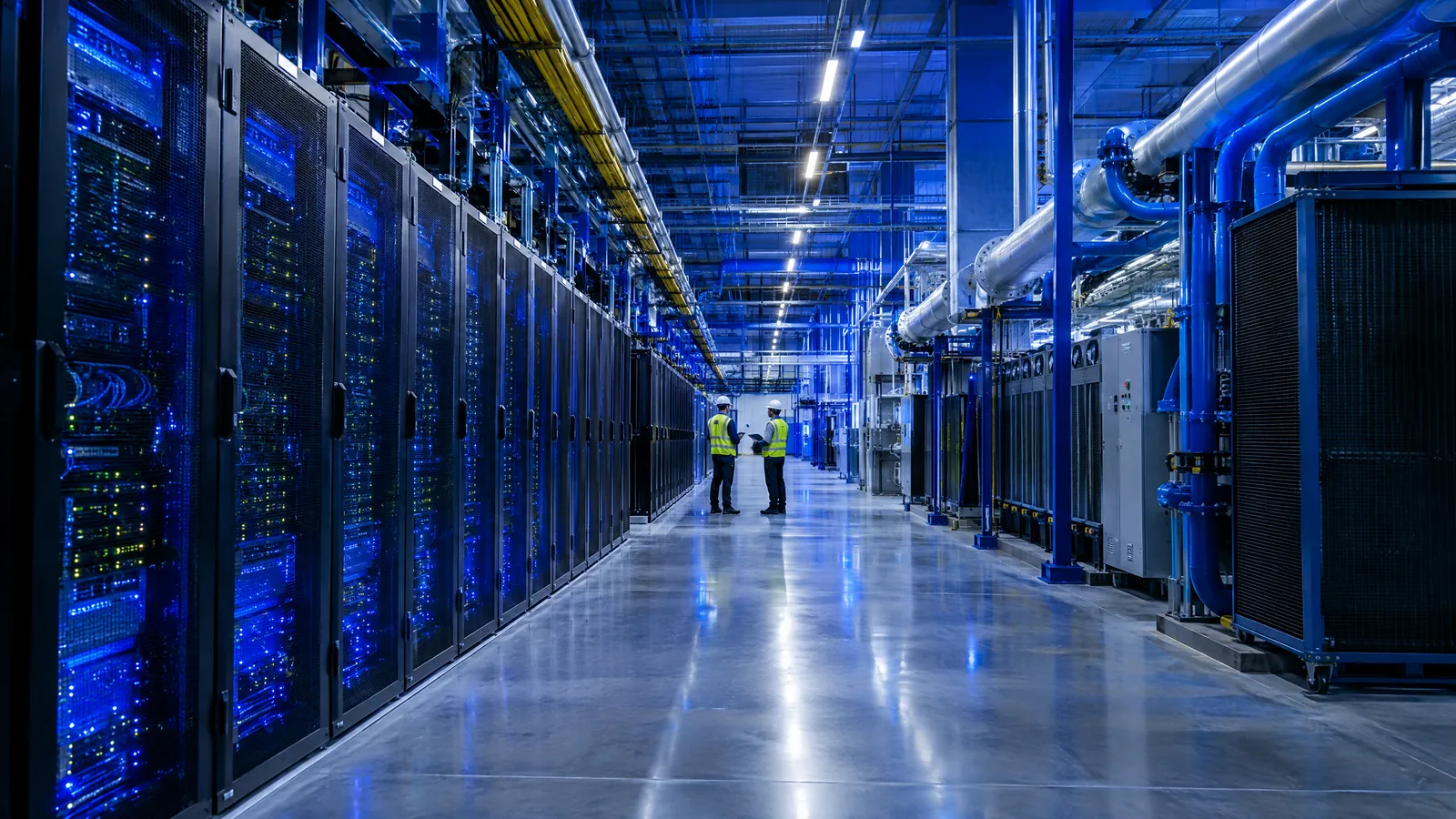
Conventional cloud facilities host many kinds of digital services. AI adds a particularly intensive class of work: training large models and serving them to users at scale. That requires clusters of accelerators, high-speed networking and cooling systems designed for dense racks. The IEA notes that a typical AI-focused data centre can use as much electricity as 100,000 households, while the largest projects under construction can use far more. [2] The comparison is illustrative rather than a measure of every site, because equipment, operating hours, climate and local household consumption differ.
This changes the planning sequence. Developers still need land, buildings and fibre links, but a credible connection to electricity supply can be decisive. A facility may consume power around the clock, while its use can also vary sharply as computing jobs start and finish. That profile matters for grid operators, which must maintain reliability during daily peaks and when wind or solar output changes. Cooling is another practical constraint. Water needs depend on the cooling design and local climate; liquid, immersion and closed-loop approaches can reduce some pressures but do not remove the need for site-specific assessment. [5]
Chip demand extends beyond the headline processors
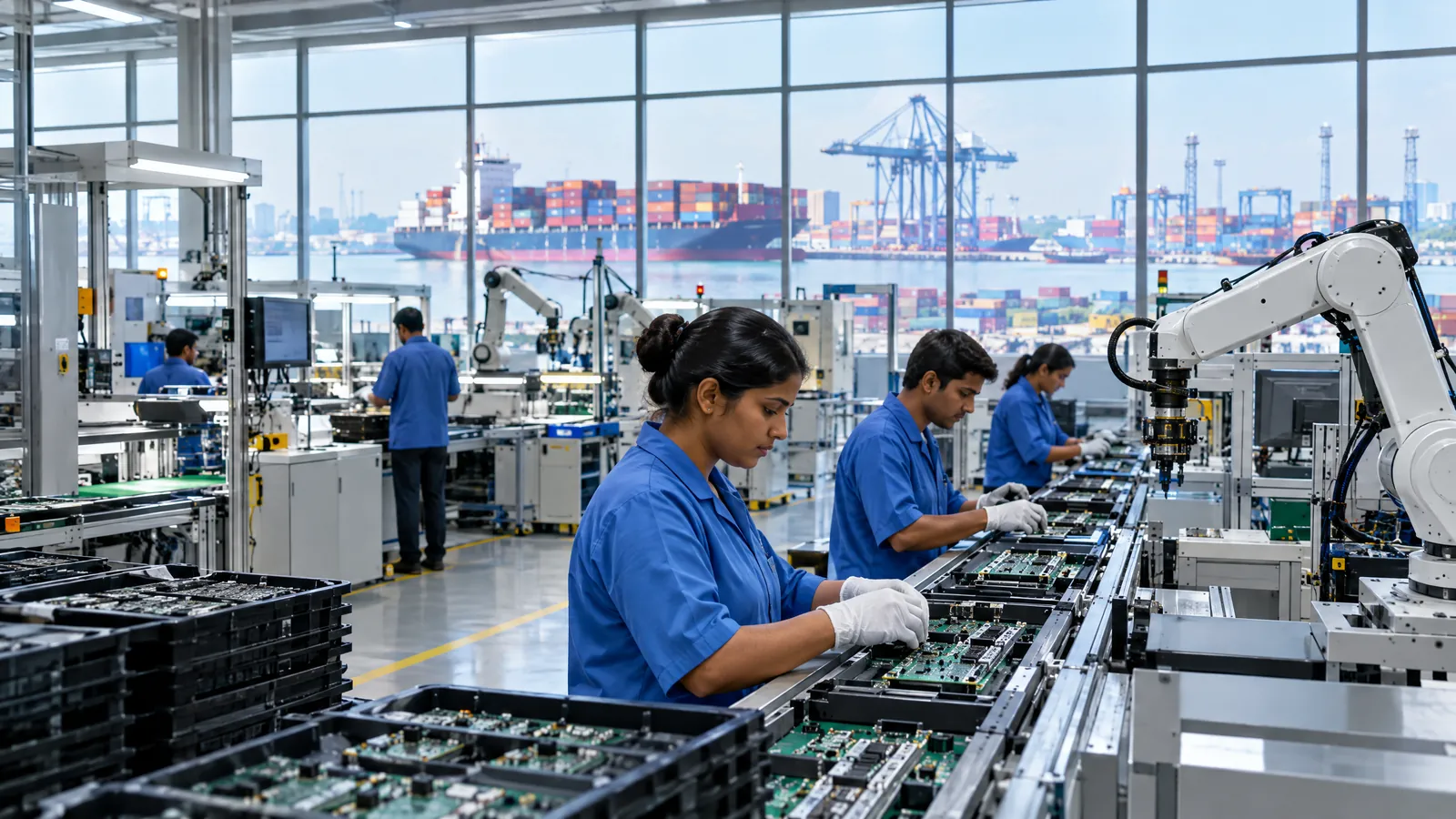
The most visible hardware in this expansion is the AI accelerator: a processor designed to perform the parallel calculations used in machine learning. Yet a functioning AI cluster also depends on memory, networking chips, power-management devices, servers, optical links and packaging. Demand therefore reaches across a supply chain that is geographically dispersed and has long lead times for some specialised production steps.
The latest broad sales data shows the scale of the wider cycle, although sales do not isolate AI use. The Semiconductor Industry Association reported global semiconductor sales of $791.7 billion in 2025, up 25.6% from 2024. Logic-product sales rose 39.9%, and memory sales rose 34.8%; both categories are important to high-performance computing. [3] Those figures are an industry-wide signal, not proof that every increase came from AI. Consumer electronics, vehicles and industrial equipment also use chips, and capacity additions or shifts in memory pricing can affect the totals.
For data-centre operators, the limiting component is not always the best-known chip. The IEA has identified tighter supply chains for advanced chips and IT components alongside shortages in transformers and gas turbines. [1] That makes the infrastructure race broader than semiconductor fabrication. A delayed transformer, a congested port or a missing transmission connection can hold back a completed data hall.
The grid, not floor space, is often the harder constraint
Electricity systems are already responding to rising demand from industry, air conditioning, electric vehicles and urban growth. Data centres add a large, concentrated load in particular locations. The IEA expects global electricity demand to grow by an average 3.6% a year from 2026 to 2030, with advanced economies also returning to growth after a long period of relative stagnation. In the United States, it expects data-centre expansion to account for about half of electricity-demand growth to 2030. [4] Results will differ widely by country and region.
Meeting that load is not simply a matter of adding generation. New lines, substations and transformers must carry power to the site. The IEA says transmission lines can take four to eight years to build in advanced economies and warns that connection queues and equipment lead times can delay projects. [2] Location therefore matters: building near available generation or less-constrained networks may reduce pressure, while concentration in established clusters can intensify it.
The electricity mix is also unsettled. Renewable power, storage, nuclear, geothermal and gas-backed generation are all part of current plans in different markets. The IEA's 2025 outlook found that renewables could meet half of global growth in data-centre demand to 2035, supported by storage and the wider grid, while dispatchable generation remains important for reliability. [2] These are scenarios, not guarantees; policy, construction schedules, fuel availability and technology costs can change the eventual mix.
India's opportunity comes with a planning test
India is expanding digital infrastructure while overall power demand grows with cooling, industry and electrification. The Ministry of Electronics and IT said in August that installed data-centre capacity had increased from 375 MW in 2020 to about 1,575 MW, with activity extending beyond established hubs such as Mumbai, Chennai, Hyderabad, Bengaluru and Delhi NCR. [5] That installed IT capacity should not be confused with total future electricity demand: the units, timeframes and assumptions are different.
A July Rajya Sabha reply by the Ministry of Power put the longer planning signal in clearer terms: an additional 26.3 GW of load from AI data centres is projected by 2031-32, expected to be integrated into the grid and primarily served by renewable capacity. [6] The same reply said inter-state and intra-state transmission projects were under construction and described planned grid-support technologies, including battery storage and synchronous condensers. The projection is not a committed project pipeline, but it indicates the scale planners are being asked to accommodate.
For communities and public agencies, the questions are practical: who pays for new grid assets, how reliably can a site be supplied during peak demand, how is water managed, and how transparent are performance claims? India has standards covering measures such as power, carbon and water usage effectiveness for data centres, the electronics ministry says. [5] Clear reporting and coordination between data-centre developers, utilities and local authorities will matter as much as headline capacity announcements.
What happens next
The next phase will be shaped by execution rather than announcements alone. Watch for grid connection decisions, transformer and transmission delivery times, the availability of advanced chips and memory, and whether operators can make computing loads more flexible when the grid is stressed. New cooling designs and better hardware and model efficiency could curb energy per computation, but higher usage could offset part of those gains.
The larger uncertainty is pace. AI adoption, the size of models, electricity prices, permitting, and the speed of new generation and networks will all influence how much capacity is actually built and where. The IEA's central message is that efficient equipment does not by itself settle the energy question. Matching computing growth with dependable, affordable power and grid infrastructure will determine whether the expansion proceeds smoothly or is slowed by physical bottlenecks. [1]
Questions readers ask
Why do AI data centres use more electricity than other data centres?
AI training and inference rely on dense clusters of specialised processors, memory and high-speed networking. Those systems draw substantial power and produce heat that must be removed continuously. Actual use varies by workload, equipment, utilisation, climate and cooling design.
Does more efficient AI hardware automatically lower total electricity use?
No. Efficiency can reduce electricity required for each task, but total use can still rise if more people and businesses run AI tools or use more compute-intensive applications. This is why both efficiency and the scale of adoption matter.
What does the 26.3 GW figure mean for India?
It is the Ministry of Power's projected additional AI-data-centre electricity load by 2031-32, not current installed data-centre capacity or a guarantee that every project will be built. Integrating that potential load would require generation, transmission, substations and grid-management planning.
Sources
- Data centre electricity use surged in 2025, even with tightening bottlenecks driving a scramble for solutions — International Energy Agency. Accessed 2026-09-23.
- Energy and AI: Executive summary — International Energy Agency. Accessed 2026-09-23.
- Global Annual Semiconductor Sales Increase 25.6% to $791.7 Billion in 2025 — Semiconductor Industry Association. Accessed 2026-09-23.
- Electricity 2026: Demand — International Energy Agency. Accessed 2026-09-23.
- Government Promotes Sustainable Growth of Data Centres through Energy-Efficient and Clean Energy Measures — Press Information Bureau, Government of India. Accessed 2026-09-23.
- Rajya Sabha Unstarred Question No. 956: Power Demand Projections, Grid Infrastructure and Capacity Expansion — Ministry of Power, Government of India / Rajya Sabha. Accessed 2026-09-23.
Authored by Anna News Desk. External reporting and official sources were reviewed for this explanatory article. Figures and projections are attributed to the cited sources and may change as projects, policy and demand evolve. This article is for general information and is not investment advice.