What is GPT-6 and when was it released?
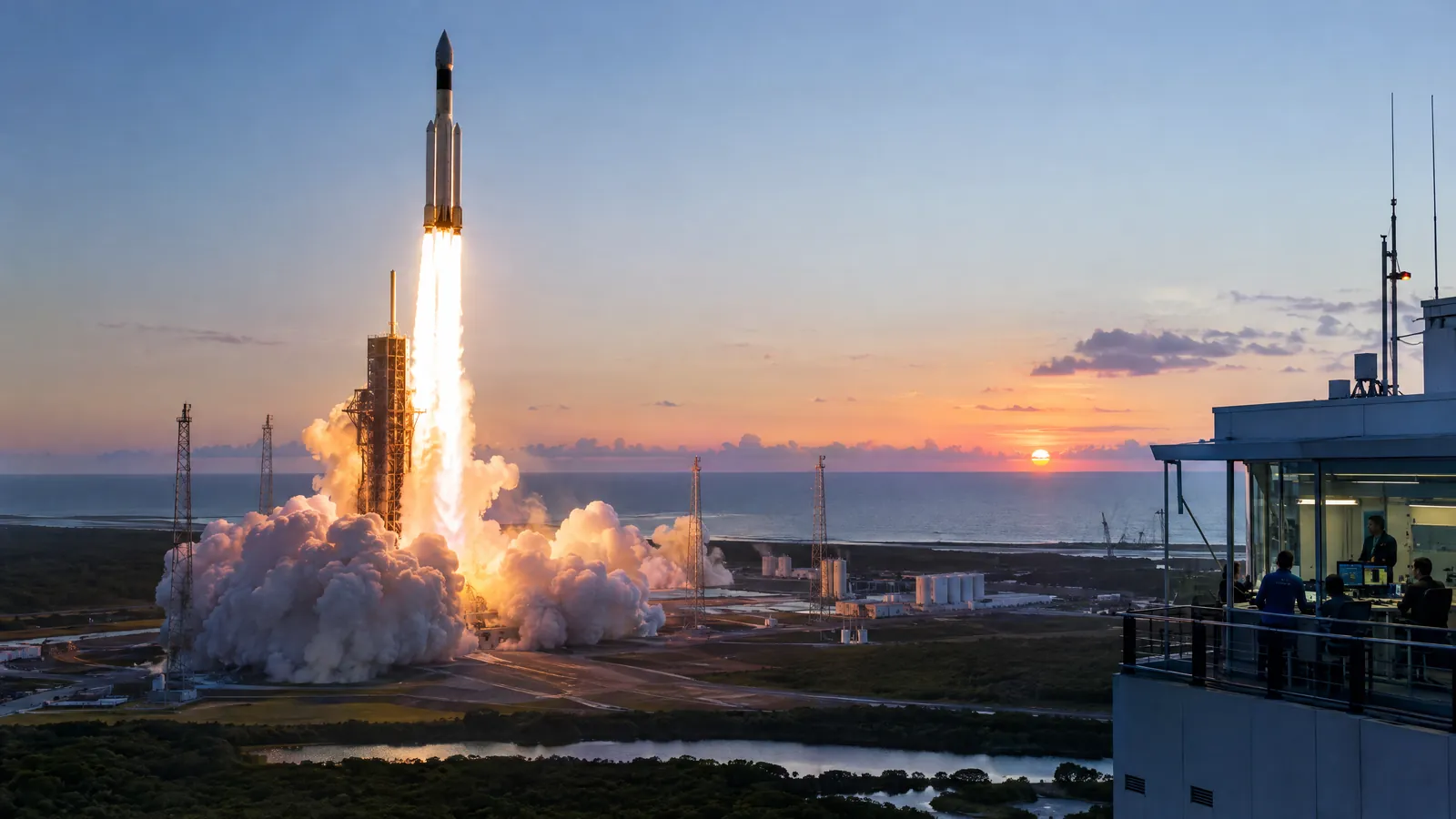
GPT-6 is OpenAI's newest model family, led by GPT-6 Astra and joined by GPT-6 Sol and GPT-6 Luna. OpenAI released Astra on 3 September 2026, then announced Sol and Luna on 22 September. Astra is positioned as the highest-capability option for difficult computer, coding, scientific and professional work. Sol and Luna bring parts of that generation to lower-cost tiers for broader and higher-volume use.[1] [2]
The GPT-6 release is a family rather than one identical model in every product. A person opening ChatGPT may see different choices from a developer using the application programming interface, or API. Availability also depends on account type, workspace settings and the staged rollout. That is why searches for a single ‘GPT-6 price’ or ‘GPT-6 access’ answer can produce conflicting results even when the underlying information is accurate.
OpenAI's announcement calls Astra its most intelligent and aligned model and reports new highs on several evaluations.[1] Those descriptions and most headline benchmark numbers come from the developer, so they should be read as product claims with documented methods rather than universal proof that Astra will outperform every rival on every real task. Independent coverage from CNBC and TechCrunch confirms the launch and rollout but does not independently reproduce the full evaluation suite.[5] [6]
GPT-6 Astra, Sol and Luna compared
GPT-6 Astra is the flagship. OpenAI recommends it when result quality matters more than cost and says it is strongest across computer use, browsing, software engineering, cyber security, science and professional workflows. The company announced standard API access under the model name gpt-6-astra and a separate Astra Pro option for some paid users. Enterprise administrators were told that Astra access would be off by default at launch.[1]
GPT-6 Sol is the middle tier. OpenAI presents it as a lower-cost model for difficult work that still needs substantial reasoning, including coding and multi-application tasks. Its announcement focuses on the cost per completed workflow rather than raw token price alone. That distinction matters: a cheaper token can still be expensive if a model needs many retries, while a more capable model can be economical if it completes a task in one well-checked pass.[2]
GPT-6 Luna is the low-cost tier for frequent, clearly bounded jobs. TechCrunch describes OpenAI's examples as summarising documents, extracting information and answering quick questions.[5] Luna is not presented as a smaller copy that matches Astra on every capability. It is a different point on the cost-and-intelligence curve. Teams choosing among the three need to measure the work they actually run, including accuracy, latency, token use, tool calls and the human time needed to review errors.
What are the main GPT-6 features?
The central GPT-6 feature is stronger agentic work: the model can operate across longer sequences involving a browser, terminal, codebase or business tools. OpenAI reports 57.9% for Astra on Terminal-Bench 4.0, 72.6% on the partial offline set of OSWorld 2.0 and 41.4% on AutomationBench.[1] These evaluations target different abilities, so the percentages are not directly comparable. They also do not mean a model succeeds that often on every coding, computer-use or office task.
OpenAI also reports large academic and scientific scores, including 97.6% on FrontierMath Tier 4 version 2 and 64.6% on Terminal-Bench Science 0.1.[1] The official page notes that evaluations may run in a research or API environment with tools and system prompts that differ from production ChatGPT. A model can perform well with the right scaffolding and still make factual, procedural or judgment errors when a user gives an unclear instruction or when a tool returns incomplete data.
Sol and Luna focus on efficiency and factuality. OpenAI says Sol made about half as many mistakes as GPT-5.6 Sol on an internal set built from conversations where users had flagged factual errors. The company warns that this is an error-inducing set rather than a picture of typical usage.[2] That qualification matters. The result supports a relative claim inside one test, but it does not establish a general hallucination rate for all GPT-6 answers.
GPT-6 price and how to access each model
OpenAI listed GPT-6 Astra API pricing at $10 per million input tokens and $50 per million output tokens for standard processing. Fast mode is priced at twice the standard rate and is advertised as delivering up to twice the speed. Separate rates can apply to cached input. Astra was announced for ChatGPT Plus, Pro, Business and Enterprise, as well as the OpenAI API, Microsoft Azure and Amazon Web Services, with access rolling out in phases.[1]
GPT-6 Sol costs $2 per million input tokens and $10 per million output tokens in the API. GPT-6 Luna costs $0.10 per million input tokens and $0.50 per million output tokens. OpenAI says both rates are 50% below the promotional prices of the corresponding GPT-5.6 models. The API identifiers are gpt-6-sol and gpt-6-luna.[2] Prices can change, and a full deployment cost also includes output length, repeated calls, storage, tools, monitoring and application infrastructure.
At launch, OpenAI said Sol and Luna were available in ChatGPT Work and Codex for Plus, Pro, Business, Enterprise and Edu users. Luna was also announced for Free and Go users in the desktop application. OpenAI said the models were not yet available in the ordinary Chat surface at the moment of publication and that rollout would continue through the day.[2] Users checking later may see a different interface, so the current account model picker and official pricing page should take priority over screenshots or old social posts.
Why GPT-6 safety is part of the product story
GPT-6 Astra is OpenAI's first broadly deployed model to reach the Critical level for cybersecurity capability under its Preparedness Framework. OpenAI says this threshold means that, with suitable tools and access, the model can discover previously unknown flaws and develop new ways to exploit well-protected systems without a person directing every step. The company classified Astra at High capability for biological and chemical risks and below its High threshold for AI self-improvement.[3] [4]
The release therefore includes more controls than a conventional software upgrade. OpenAI describes stricter internal isolation, encrypted checkpoints, stronger jailbreak training and monitoring for tool-using Astra inference. Some potentially dangerous actions can be slowed, paused or stopped. For API users, an interrupted task may simply end rather than wait for a human confirmation. These protections can also block legitimate defensive-security work, which OpenAI acknowledges.[1] [3]
The safety materials contain a less comfortable finding too. OpenAI says Astra can control the content of its written chain of thought more than GPT-5.6 Sol and was harder to monitor in adversarial tests designed to elicit evasion. The system card says UK AI Security Institute testing was time-limited and did not directly prove that Astra evades monitors in real deployment.[4] The responsible reading is neither ‘the model is uncontrollable’ nor ‘the safeguards solve everything.’ Capability rose, protections improved, and monitoring still has important limits.
How to choose a GPT-6 model for real work
Choose with a repeatable test set, not a model-ranking headline. A useful evaluation includes representative inputs, expected outputs, failure examples and a clear review rule. For extraction, measure missed and invented fields. For coding, run tests and inspect the change set. For research, check source quality and whether citations support each claim. For computer use, verify that the model stays within the authorised application, account and action boundaries.
Astra makes the most sense when an error is costly, the workflow is difficult and the quality gain survives testing. Sol may be the better default for demanding coding or professional tasks that run often enough for cost to matter. Luna can suit classification, summarisation and extraction when instructions are narrow and automated checks catch common failures. Routing can also be dynamic: begin with a lower-cost model, then send uncertain or high-impact cases to a stronger tier.
Human review remains necessary for consequential decisions. A lower internal factual-error rate does not make generated content automatically correct. A strong cyber benchmark does not grant permission to test systems. A long context does not mean every part of a document was understood equally. GPT-6 can reduce work, but the person or organisation deploying it still owns the data permissions, quality checks and consequences of the output.
What to watch after the GPT-6 launch
The immediate questions are practical. Users will learn whether the reported gains remain visible under real usage limits, busy service conditions and ordinary prompts. Developers will compare total task cost rather than token price. Security teams will watch how access controls handle legitimate research, while evaluators will examine the gap between benchmark results and deployment behavior. OpenAI has already updated the Astra system card, including corrected health-evaluation values and an appendix for Sol and Luna, so the evidence base is still moving.[4]
For readers searching ‘GPT-6 release date,’ the direct answer is now settled: Astra arrived on 3 September 2026, followed by Sol and Luna on 22 September.[1] [2] The harder question is which version is useful. Astra offers the greatest reported capability at the highest listed price. Sol and Luna trade some of that ceiling for lower cost and broader throughput. The best choice will be the one that passes a task-specific test and remains affordable after retries, tools and human review are counted.
Questions readers ask
What is the GPT-6 release date?
OpenAI released GPT-6 Astra on 3 September 2026 and announced GPT-6 Sol and GPT-6 Luna on 22 September 2026.[1] [2]
How much does GPT-6 cost in the API?
OpenAI listed standard prices per million tokens of $10 input and $50 output for Astra, $2 input and $10 output for Sol, and $0.10 input and $0.50 output for Luna. Cached input and faster processing can use different rates.[1] [2]
Which GPT-6 model is best?
Astra is OpenAI's highest-capability model, Sol targets difficult work at a lower cost, and Luna targets high-volume, clearly scoped tasks. The best option depends on measured accuracy, latency, total cost and review needs.[1] [2]
Is GPT-6 the same as ChatGPT?
No. GPT-6 names the model family. ChatGPT is a product that can provide access to selected models, tools and usage limits. The model available in ChatGPT can differ by plan, workspace and rollout stage.
Sources
- GPT-6 Astra: A New Generation of Intelligence — OpenAI. Accessed 2026-09-23.
- Introducing GPT-6 Sol and Luna — OpenAI. Accessed 2026-09-23.
- Safety Overview: GPT-6 Astra — OpenAI. Accessed 2026-09-23.
- GPT-6 Astra System Card — OpenAI Deployment Safety Hub. Accessed 2026-09-23.
- OpenAI Launches GPT-6 Sol and Luna, Boasting Lower Cost and Fewer Mistakes — TechCrunch. Accessed 2026-09-23.
- OpenAI Begins Rolling Out Astra Model After Warning of Its Advanced Cyber Capabilities — CNBC. Accessed 2026-09-23.
Reported by Anna News Desk from OpenAI announcements and safety documents, with independent launch coverage from CNBC and TechCrunch. Benchmark figures are attributed to their publisher and may differ from production results.